Ever had that sinking feeling when you reach for a cold drink, only to find an empty ice bin? It’s a modern-day tragedy. Before you start thinking about expensive repair calls, let’s talk about one of the most common and easily fixable culprits: the water supply. Knowing How To Check Water Level In Ice Maker systems is a fundamental skill for any homeowner. It’s often the first step in diagnosing why your machine has stopped producing that glorious, clinking ice. This guide will walk you through everything, from refrigerator models to countertop warriors.
Why Does the Water Level Even Matter?
You might think as long as water is getting to the machine, you’re golden. Not quite. The water level in an ice maker is a precisely calibrated affair. Think of it like baking a cake; too little or too much of a key ingredient throws the whole recipe off.
- Too Little Water: This results in small, unsatisfying, or hollow ice cubes. The ice maker’s cycle is designed for a specific volume, and if it doesn’t get enough water, it will try its best with what it has, leading to poor quality ice that melts in a flash.
- Too Much Water: This can cause the ice tray to overflow. The excess water can spill into your ice bin, creating a giant, frozen blob instead of individual cubes. In a worst-case scenario, it can lead to leaks and water damage.
Essentially, the correct water level ensures your machine operates efficiently, produces perfect-sized cubes, and avoids unnecessary wear and tear.
How to Check Water Level in Ice Maker: A Step-by-Step Guide
The process for checking the water level varies depending on the type of ice maker you own. Let’s break it down by the most common models. But first, a quick word on safety.
Safety First: Before you start poking around inside your refrigerator or any appliance, it’s always a good idea to unplug it or turn off the corresponding circuit breaker. This prevents any risk of electrical shock.
For Built-in Refrigerator Ice Makers
This is the classic setup found in most modern kitchens. The ice maker is a self-contained unit inside your freezer compartment.
- Locate the Ice Maker Unit: Open your freezer and find the ice maker assembly. It’s usually located in the top-left corner or on the freezer door.
- Identify the Control Arm: Look for a metal bar, often called a bail arm or feeler arm. This arm’s job is to detect how much ice is in the bin. When the bin is full, the ice pushes the arm up, signaling the machine to stop producing ice. Make sure this arm is in the down, or “on,” position. Sometimes it gets bumped up by accident.
- Find the Ice Mold: This is the “tray” where the water freezes into cubes. During a normal cycle, a water inlet valve sends a pre-measured amount of water through a fill tube directly into this mold.
- Observe a Harvest Cycle: The most accurate way how to check water level in ice maker units like this is to watch it in action. You can often manually trigger a cycle. Look for a small button or a gear system. Pressing the button or rotating the gears might start the process.
- Watch the Fill: After the ice maker dumps the existing ice (if any), listen for the sound of water filling the mold. Visually inspect the mold. The water should fill each cube section nearly to the top but not overflowing. If it’s only filling halfway, you have a low water level issue.
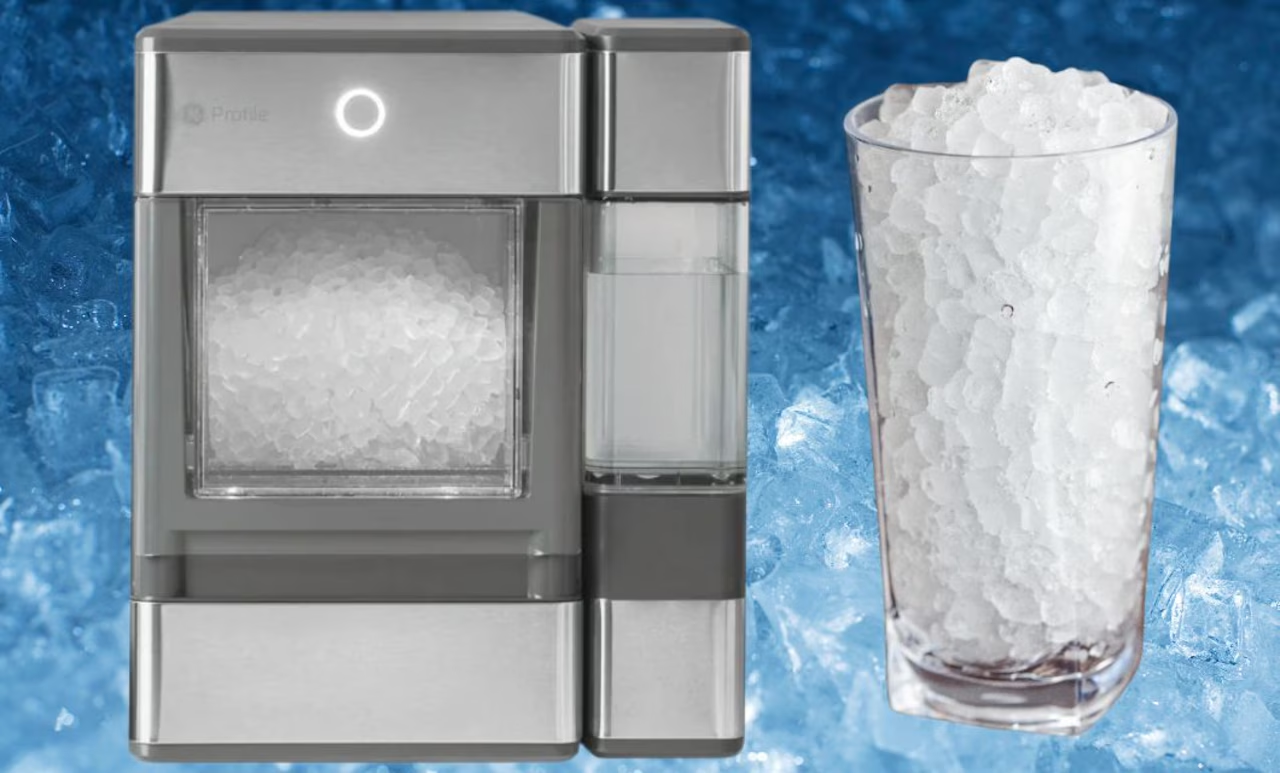
For Portable or Countertop Ice Makers
These little workhorses are fantastic for parties or RVs. They operate on a simpler, closed-loop system.
- Check the Reservoir: This is the easiest one! Simply open the lid. Inside, you will find a water reservoir, usually underneath the ice basket.
- Look for the MIN and MAX Lines: Almost every portable ice maker has clearly marked lines inside the reservoir. The water level should always be between these two lines. If it’s below the “MIN” line, the machine’s sensor will stop it from running to prevent the pump from running dry.
- Inspect the Water Sensor: While you’re in there, you might see a small sensor or float. This is what tells the machine if there’s enough water. Make sure it’s clean and not stuck.
|
Our Picks for the Best ice maker in 2026
As an Amazon Associate, we earn from qualifying purchases.
|
||
| Num | Product | Action |
|---|---|---|
| 1 | EUHOMY Countertop Ice Maker Machine with Handle, 26lbs in 24Hrs, 9 Ice Cubes Ready in 6 Mins, Auto-Cleaning Portable Ice Maker with Basket and Scoop, for Home/Kitchen/Camping/RV. (Black) |

|
| 2 | FRIGIDAIRE EFIC101-BLACK Ice Maker Machine for Countertop, 26 lbs, Adjustable Ice Cube Size, Portable Ice Cube Maker for Home/Kitchen/Office/Bar- Black |
|
| 3 | Nugget Countertop Ice Maker with Soft Chewable Pellet Ice, Pebble Portable Ice Machine, 34lbs Per Day, Self-Cleaning, Sonic Ice, One-Click Operation, for Kitchen,Office Stainless Steel Black |
|
| 4 | Frigidaire 26 Lbs per Day Portable Compact Maker, Ice Making Machine, Black Stainless, Medium |
|
| 5 | Silonn Nugget Ice Maker Countertop, Pebble Ice Maker with Soft Chewable Ice, One-Click Operation Ice Machine with Self-Cleaning, 33lbs/24H for Home,Kitchen,Office |
|
| 6 | EUHOMY Nugget Ice Makers Countertop, Pebble Ice Maker Machine with 35lbs/24H Soft Ice, Self-Cleaning Sonic Ice Maker with Ice Scoop&Basket, Pellet Ice Maker for Home/Kitchen/Office(Stainless Steels) |
|
| 7 | FRIGIDAIRE EFIC189-Silver Compact Ice Maker, 26 lb per Day, Silver |
|
| 8 | Ice Maker Countertop, 9 Cubes Ready in 6 Mins, 26 lbs per Day, Ice Machine with 2 Ice Sizes and Self-Cleaning, Portable Ice Maker with Handle for Home, Kitchen, Camping, RV, Office, Black |
|
| 9 | EUHOMY Nugget Ice Maker Countertop with Handle, Ready in 6 Mins, 34lbs Per Day, Removable Top Cover, Auto-Cleaning, Portable Sonic Ice Maker with Basket and Scoop, for Home/Party/RV/Camping (Black) |
|
| 10 | ZAFRO Countertop Ice Maker, 26.5Lbs/24H, 9 Bullet Cubes in 6 Mins, Self-Cleaning Portable Ice Machine with 2 Ice Sizes (S/L), Quiet Compact Design, Double Handles, for Home, Party, RV, Camping, Green |
|
For Undercounter and Commercial Ice Makers
These are more robust units, often found in home bars or commercial kitchens. They are typically connected directly to a water line, much like a refrigerator model, but with more heavy-duty components.
- Locate the Water Inlet and Float Valve: These machines often use a float valve system, similar to the one in your toilet tank. As the water level in the machine’s reservoir drops, the float lowers and opens a valve to let more water in.
- Inspect the Float’s Position: You can typically remove a service panel to access these components. Check that the float moves freely and isn’t stuck or obstructed by mineral buildup.
- Check the Water Trough or Reservoir: This is where the water that will be turned into ice is held. The level should be consistent and match the manufacturer’s specifications. If it’s low, it could point to a problem with the float valve or low water pressure from the supply line.
What If the Water Level is Wrong? Troubleshooting Tips
So, you’ve figured out how to check water level in ice maker systems and discovered it’s not right. What’s next?
If the Water Level is Too Low (or No Water at All)
This is the most common issue.
- Check the Water Supply Line: Make sure the small water line running to your fridge isn’t kinked or frozen. A frozen line often occurs right where the line enters the freezer. You may need to gently thaw it with a hairdryer on a low setting.
- Inspect the Water Inlet Valve: This is a small, electronically controlled valve where the water line connects to the back of the fridge. If it’s clogged with sediment or has failed electrically, it won’t let water through.
- Check the Water Filter: A clogged refrigerator water filter can severely restrict water flow, not just to your dispenser but to your ice maker too. Try replacing it.
“In my 15 years as an appliance technician,” says David Chen, a certified repair specialist, “I’d say a faulty water inlet valve is the culprit in at least 40% of ‘no ice’ service calls. It’s a relatively inexpensive part, but it’s crucial for the entire operation.”
If the Water Level is Too High (Overflowing)
This is less common but can be messier.
- Faulty Water Inlet Valve: The valve might be stuck open, allowing water to continuously trickle into the ice maker even after the fill cycle is supposed to end.
- High Water Pressure: In rare cases, if the water pressure in your home is excessively high, it can force too much water through the valve during the short fill cycle. You may need a pressure regulator installed on your water line.
- Ice Maker Module Failure: The internal “brain” of the ice maker might be malfunctioning and keeping the valve open for too long.
Frequently Asked Questions (FAQ)
Q1: How do I know if my ice maker water level is low without watching a cycle?
A: The most obvious sign is the ice itself. If you’re consistently getting small, thin, or hollow ice cubes, it’s a strong indicator that the water fill level is too low for each cycle.
Q2: Can I manually add water to my refrigerator’s ice maker tray?
A: While you technically can, it’s not recommended. You risk overfilling it, and it doesn’t solve the underlying problem. The ice maker is designed to be fed automatically. Manually filling it is a temporary fix at best.
Q3: Why are my ice cubes hollow?
A: Hollow ice cubes are almost always caused by an insufficient water supply during the freezing cycle. This points to a low water level, a clogged water line, or a filter that needs replacing.
Q4: How do you adjust the water level in a refrigerator ice maker?
A: Some older models have a small adjustment screw. Turning it slightly can increase or decrease the fill time, and thus the water level. However, most modern units are self-regulating and do not have a manual adjustment.
Q5: What does the water level sensor look like in an ice maker?
A: In a refrigerator, it’s often part of the electronic control board and uses an infrared beam. In a portable unit, it’s typically two small metal prongs or a float switch inside the water reservoir.
Conclusion: You’re in Control of the Cold
Mastering how to check water level in ice maker systems demystifies a common household appliance and empowers you to be the first line of defense against a no-ice crisis. Whether it’s a simple adjustment like lowering the bail arm or identifying a more complex issue like a clogged filter, understanding this basic principle can save you time, money, and the frustration of a warm drink. So next time your ice production slows, you’ll know exactly where to start looking.